ICHAFU: THE IGBO WOMEN’S VOLUMINOUS CULTURAL HEADDRESS.
Across Southeastern Nigeria, an elaborate and sculptural headwrap known as Ichafu has long stood as a symbol of identity, status and artistic expression among Igbo women. The Ichafu (literally large or voluminous Ichafu), also known as Ichafu, Ichafo, or Ichi-afo, is a traditional headwrap closely associated with Igbo women of southeastern Nigeria. It is distinguished by a sculptural, gathered, and voluminous form with a pronounced vertical emphasis, structured, yet fluid. Rather than functioning as an isolated garment, it typically forms part of a coordinated ensemble consisting of a blouse and matching wrappers [7]. Historical and ethnographic descriptions indicate that elaborate wrapping and voluminosity have long been central to its aesthetic and social significance [4][5]. Headwrapping is widely practiced across different regions of Nigeria and in many parts of Africa [6], though its forms and techniques are far from uniform. Among Igbo women in particular, ethnographic descriptions note a coordinated ensemble of wrapper, blouse, and head covering, often formed from several yards of patterned cloth, including locally woven and acquired textiles, skilfully wrapped and arranged around the body and head as part of formal dress [7, p. 164].
Variations in construction ranging from pleating and firm structuring to more wrapped or tapered forms reflect different aesthetic preferences and material practices across regions [6]. This practice is also reflected in Nigerian English usage, where expressions such as “head-tie” have been linked to the way Igbo women tie cloth on the head, pointing to the cultural grounding of the term in everyday dress practices [10].
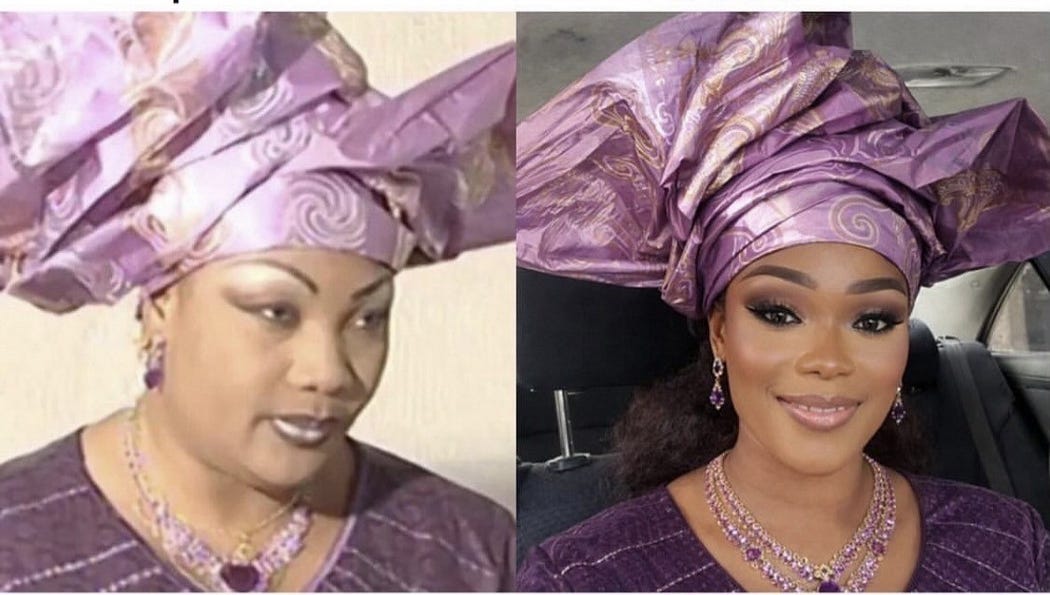
Within this broader context, the Ichafu can be understood as a distinct expression of Igbo dress. It is formed through layered wrapping and gathered folds, often using several yards of patterned cloth, including both locally woven and acquired textiles [7, p. 164], and reflects a broader tradition of cloth production and use within Igbo material culture [8][9]. These are skilfully arranged to create a controlled yet expansive form, structured, yet fluid as seen in early visual representations of head coverings (Figures 1).
Etymology and Morphological Derivation
The Ichafu is associated with Igbo verb roots describing the physical processes involved in shaping and securing cloth:
- chị (verb) denotes “to gather, bunch, or collect” (cf. Williamson, root -chị: “to gather together”)
- –fọ (verb) denotes “to tuck, bind, or secure,” involving insertion into a confined or folded space (cf. Williamson, p. 84, -fọnye: “to put or tuck into”)
- –fu (verb) denotes “to roll, wrap, or coil”; early lexicographic records (1904) define fu and fuba as corresponding to the French enrouler (“to roll, wrap or wind”) and the English “convolve” [1]
These verbs describe complementary actions of gathering, rolling, and securing in the manipulation of cloth, enabling it to be layered in ways that produce volume in the formed headwrap. The compound Ichafu can therefore be interpreted as referring to a gathered and wrapped or tucked head covering. This interpretation aligns with expressions such as ichi-afu-isi (“to gather and wrap the head”), which reflect the coordinated techniques involved in forming the headwrap. This relationship between practice and language is also reflected in Nigerian English usage, where the expression “head-tie” has been identified as deriving from the manner in which Igbo women tie cloth on the head, indicating the cultural grounding of the term in indigenous dress practices [10].
While Ichafu derives from the verb roots describing the act of gathering and securing cloth, the meaning implies large or voluminous scarves, denoting an expanded and more elaborate stylistic form.
Lexical System
Beyond this compound, early Igbo lexical systems include related expressions such as:
nsu n’isi (“head kerchief”)
akwaisi (“head dress”) [1]
unari / ulari / ilari (dialectal terms for headgear) [7]
These terms reflect a broader indigenous vocabulary for head coverings, incorporating references to cloth (akwa), the head (isi), and methods of wrapping [8][9][10]
Lexicographic and Comparative Distinctions
Early lexicographic records indicate that Ichafu was recognized as a structured head covering. The English–Ibo–French Dictionary (1904) records forms such as Içafo under categories translated as “head-dress” (coiffure) and “head covering” (couvre-chef) [1]. These entries distinguish the term from unrelated cloth categories. In the same dictionary, chiffon (“rag” or light cloth) is translated as nkilika akwa (cloth fragments or rags), indicating that the two terms were treated as distinct [1]. This suggests that Ichafu referred to a structured form of head covering rather than a generic or lightweight cloth.
History and Ethnographic Development
Early Descriptions (19th–Early 20th Century)
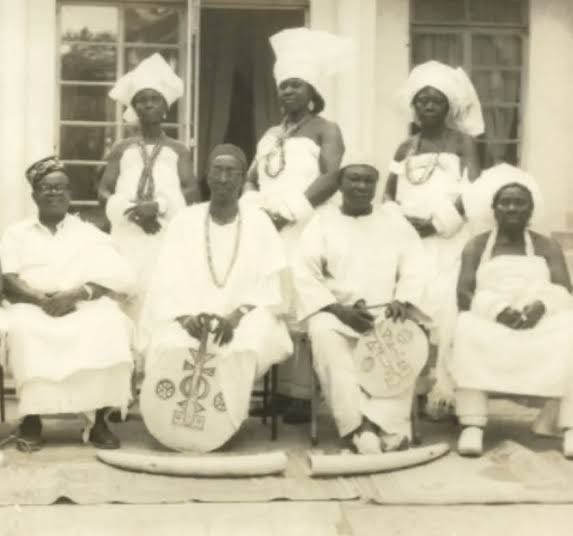
Headwrapping among Igbo women is widely regarded as indigenous [4][5]. Early accounts of Igbo women describe the head as being bound with cloth, often moderate or large in some settings, indicating established wrapping practices [6]. The 1913 anthropological work of Northcote Thomas documents expressions such as nsu n’isi (“head kerchief”) [3], demonstrating that specific terminology existed for head coverings well before the colonial peak.
By the early 20th century, ethnographic and cultural accounts describe coordinated attire consisting of wrappers, blouses, and head coverings. Basden (1921) and Green (1949) note that women enhanced their appearance during communal gatherings through such coordinated dress [4][5]. Descriptions from this period emphasize skilled wrapping techniques and structured presentation. Studies of marriage performance describe the bride’s attire as including a “big head tie (Ichafu Nnukwu)” as part of a complete ensemble incorporating matching wrappers and beads [7], indicating both scale and prominence of the headwrap.
Contemporary Developments.
In contemporary contexts, the Ichafu has retained its expansive and structured forms. The increasing use of imported and processed textiles in eastern Nigeria since the 20th century [8][9], including fabrics such as damask, brocade, velvet, and lace has enabled greater rigidity and height in styling. Ichafu from the ancient times through the mid-1900s are often characterized by increased voluminosity through layered construction, expanded silhouettes that frame the head and upper body, and structured forms shaped through deliberate folding and wrapping. While earlier forms were already structured and voluminous, as evidenced in organized women’s groups such as Otu Odu, contemporary styles exhibit a greater degree of expansion and visual display [11], particularly in ceremonial and performative contexts such as weddings [12], Classic Nollywood representations, and women’s gatherings including August meetings [5]. In some contexts, these forms have been described as “canopy-like,” reflecting their elevated and expansive appearance.
Form, Construction, and Textiles
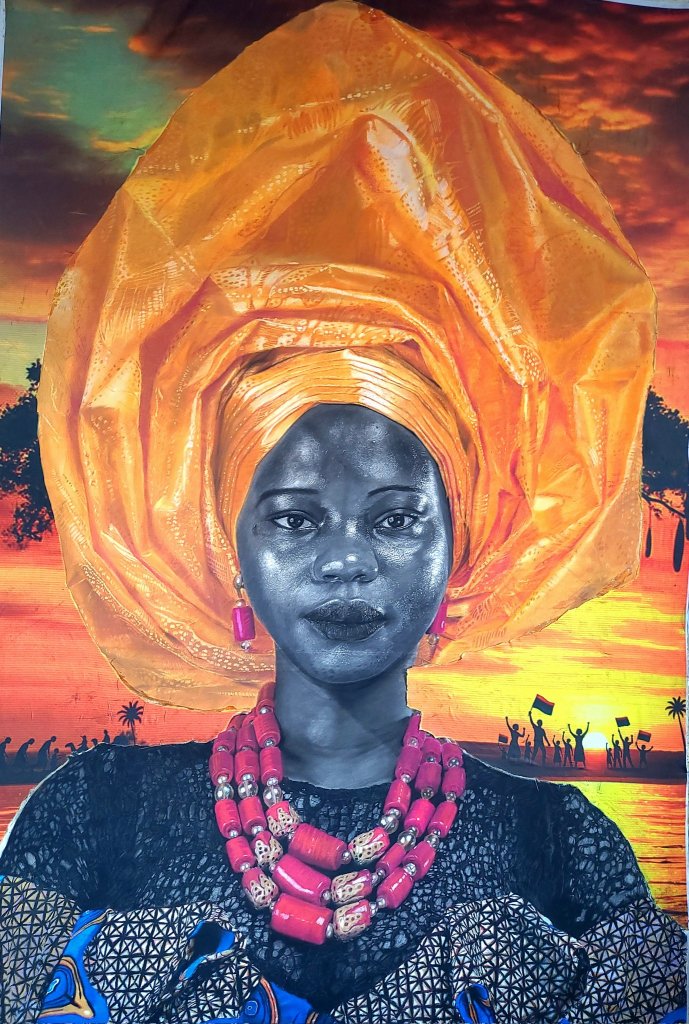
The Ichafu is formed through deliberate wrapping techniques involving: Gathering and pleating fabric, rolling and folding material into layered structures, securing folds to maintain flamboyant shapes. As illustrated in Figure 2, the resulting form is typically elevated, layered and voluminous, while retaining a degree of fluidity, reflecting the structural effects of gathering, folding, and securing techniques.
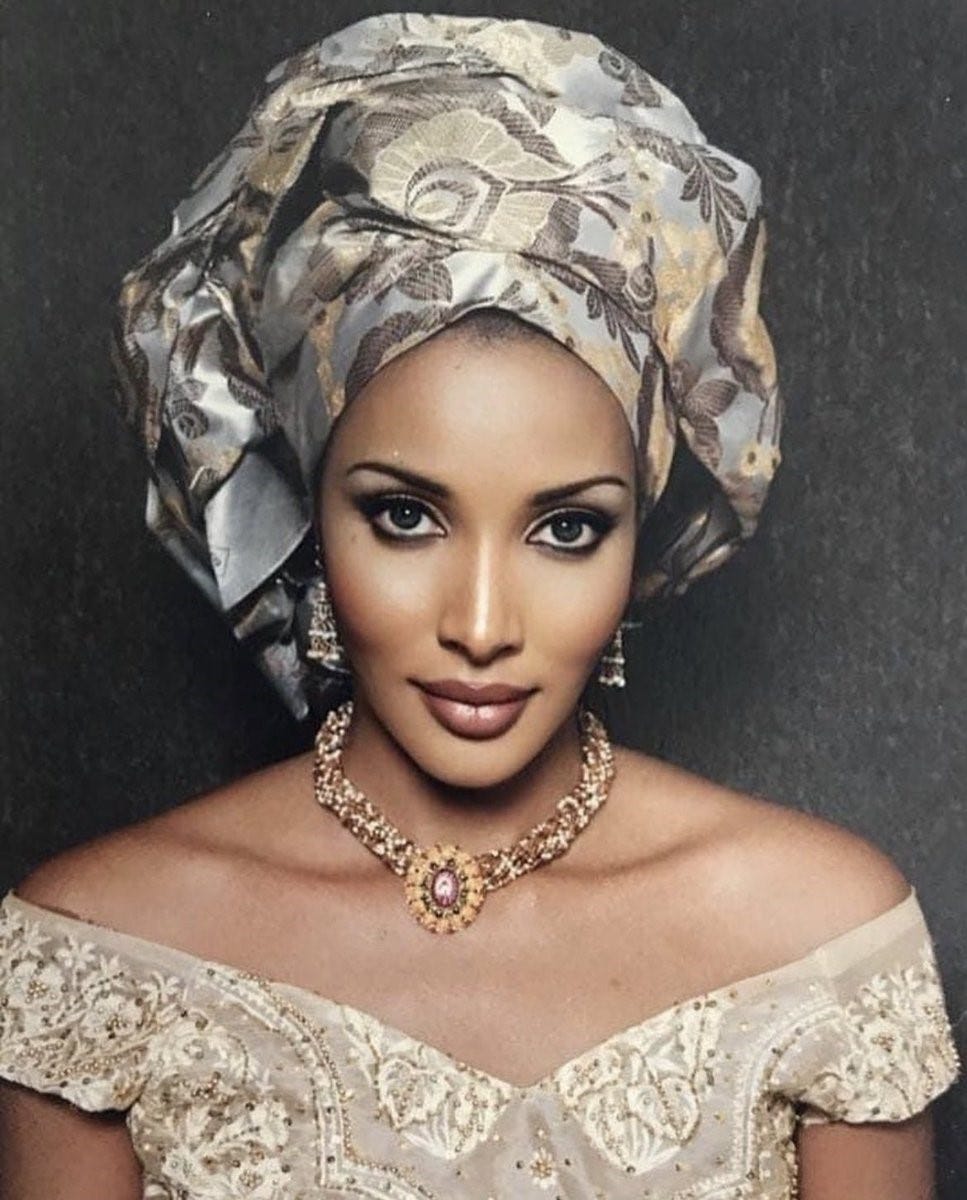
Historically, volume was achieved using indigenous textiles such as Akwete and Akwaocha [8][9], while contemporary forms often incorporate materials such as George fabric, damask, and brocade for structural effect. The resulting form is typically elevated and layered, producing a distinctive visual presence, often associated with prominence, elegance, and social distinction [4][5], while retaining a degree of fluidity in its overall composition. The materials used in Ichafu construction reflect an expansion in the use of textiles, with modern fabrics — particularly stiffened damask and brocade — enhancing visual richness and display while enabling structural volume and complexity.
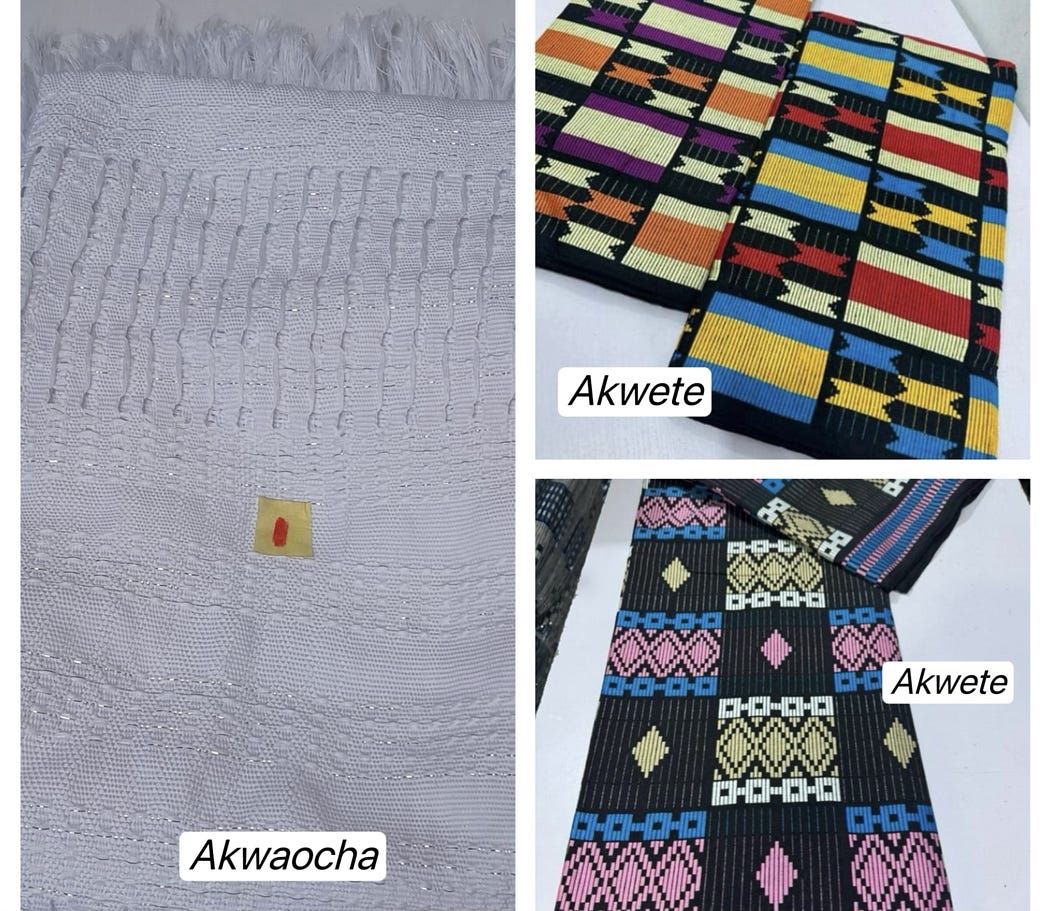
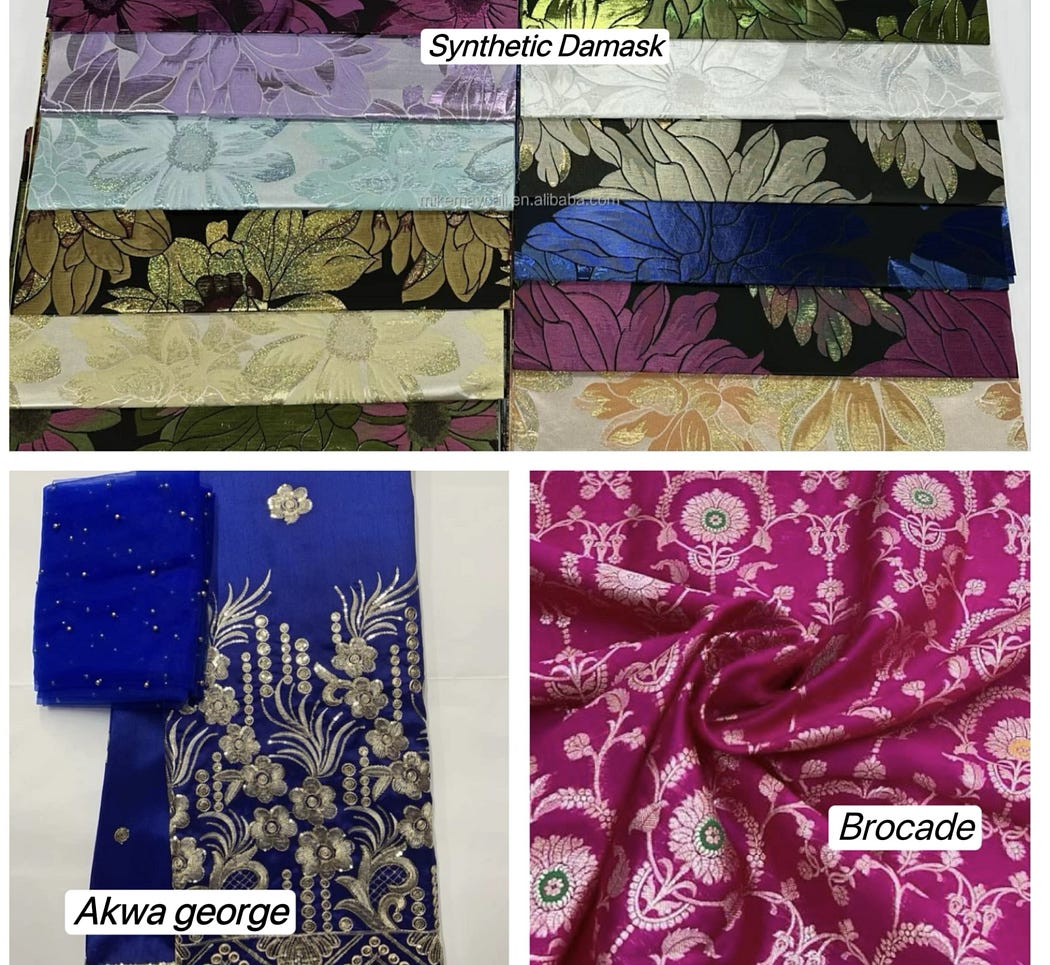
Figure 3 and 4: Comparison of indigenous Igbo textiles (left), including Akwete and Akwaocha, and imported textiles (right), including damask, akwa George, and brocade, which have been locally adapted within Igbo dress practices to enhance structural volume and decorative complexity in ichafu construction.
Cultural Significance
The Ichafu l functions as a key component of formal and ceremonial attire and is commonly worn during:
● Women’s gatherings (including August meetings) [5]
● Religious and community events
● Festivals and social occasions
● Igbankwu (traditional Igbo wedding)[12]
● Funerals, and other ceremonial contexts
It forms part of a coordinated ensemble with wrappers and blouses, serving as both adornment and a marker of identity and participation [4][5]. Historically, more elaborate styles have been associated with seniority and group membership, particularly within women’s organizations such as Otu Odu [3]. In contemporary practice, the headwrap remains central to cultural expression and ceremonial presentation.
Conclusion
The Ichafu represents a significant element of Igbo material culture, combining linguistic, structural, and social dimensions. Its formation through gathering, rolling, and securing voluminous fabric reflects a consistent technical foundation rooted in Igbo verb systems, while its evolving forms demonstrate adaptation in materials and aesthetics over time. As both a functional and symbolic garment, it continues to serve as a visible expression of identity, prestige, and cultural continuity [8][9].
While Felville claimed Igbo women wore simpler headscarves, he was not referring to Ichafu which is different from a simple headscarf. Tying Ichafu requires two or more yards of fabric, however one yard can be used to achieve voluminous, elaborate and turban like headties.
Painted Portrait of an Igbo Woman in her Traditional Regalia Featuring Ichafu Nnukwu.
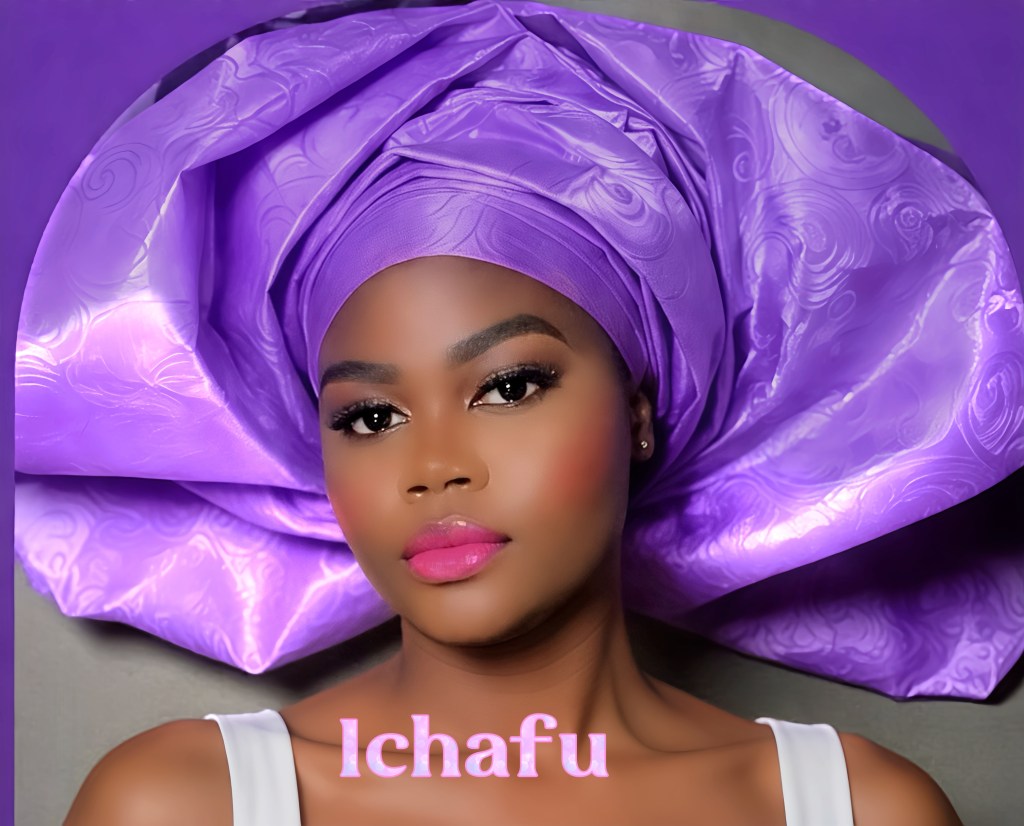
Studio Portrait of an Igbo Woman Featuring Ichafu Nnukwu
References
[1] Holy Ghost Fathers. English, Ibo and French Dictionary. Salzburg: Missionary Printing Office; 1904.
[2] Williamson, Kay. Dictionary of Onicha Igbo. 2nd ed.; 2006.
[3] Thomas, Northcote W. Anthropological Report on the Ibo-Speaking Peoples of Nigeria. London: Harrison and Sons; 1913.
[4] Basden, G.T. Among the Ibos of Nigeria. London: Seeley, Service & Co.; 1921.
[5] Green, M.M. Ibo Village Affairs. London; 1949.
[6] Floyd, Barry. Eastern Nigeria: A Geographical Review. London: Macmillan; 1969.
[7] Nzekwu, Onuora. Ibo People’s Costumes. Nigeria Magazine. 1963; 78: 164–175.
[8] Afigbo, A.E. Ropes of Sand: Studies in Igbo History and Culture. Oxford University Press; 1981.
[9] Onwuejeogwu, M.A. An Igbo Civilization: Nri Kingdom and Hegemony. Ethnographica; 1981.
[10] Okeke, N. “Nigerian English Expressions in Buchi Emecheta’s The Joys of Motherhood.” Journal of Nigerian Languages and Culture, 2012; 14(2): 461–464.
[11] Nwagbara, U. U. “Social Media Pressures on Cultural Authenticity in Traditional Igbo Wedding.” Discover Global Society. 2025. https://doi.org/10.1007/s44282-025-00158
[12] Ndu-Udeji, Maureen. “Traditional African Marriage Performance: A Study of ‘Ibu Oke’ Ceremony of the Mgbowo People.” International Journal of Education and Arts. 2021; 1(3): 66–75.


Leave a Reply